Body Image Distortion: Mirror, Mirror… Why Don't I Look the Way I Want Yet?
Eva doesn't like her nose. If she could, she'd change it. She doesn't like her breasts; as soon as she can, she'll get implants. Truth be told, she doesn't like the ratio between her hips and waist either, which strays from the beauty standards of magazines and of the most beautiful women on Instagram. She has been going to the gym faithfully for a year and carefully following her nutritionist's diet, but it's no use: the results never seem to come. Her discipline is matched only by the anxiety she feels. The mirror is her worst enemy, but it's the only one that tells her “the truth,” or at least that's what she has unconsciously decided to believe. And that belief is hurting her.
Like Eva, many women have a distorted image of themselves. According to various studies (Raich RM, Trastorno de la imagen corporal: evaluación y tratamiento; and Bobadilla Suárez and López Ávila, Distorsión de la imagen real, percibida e imaginada), this phenomenon is much more common among women, and to their detriment.
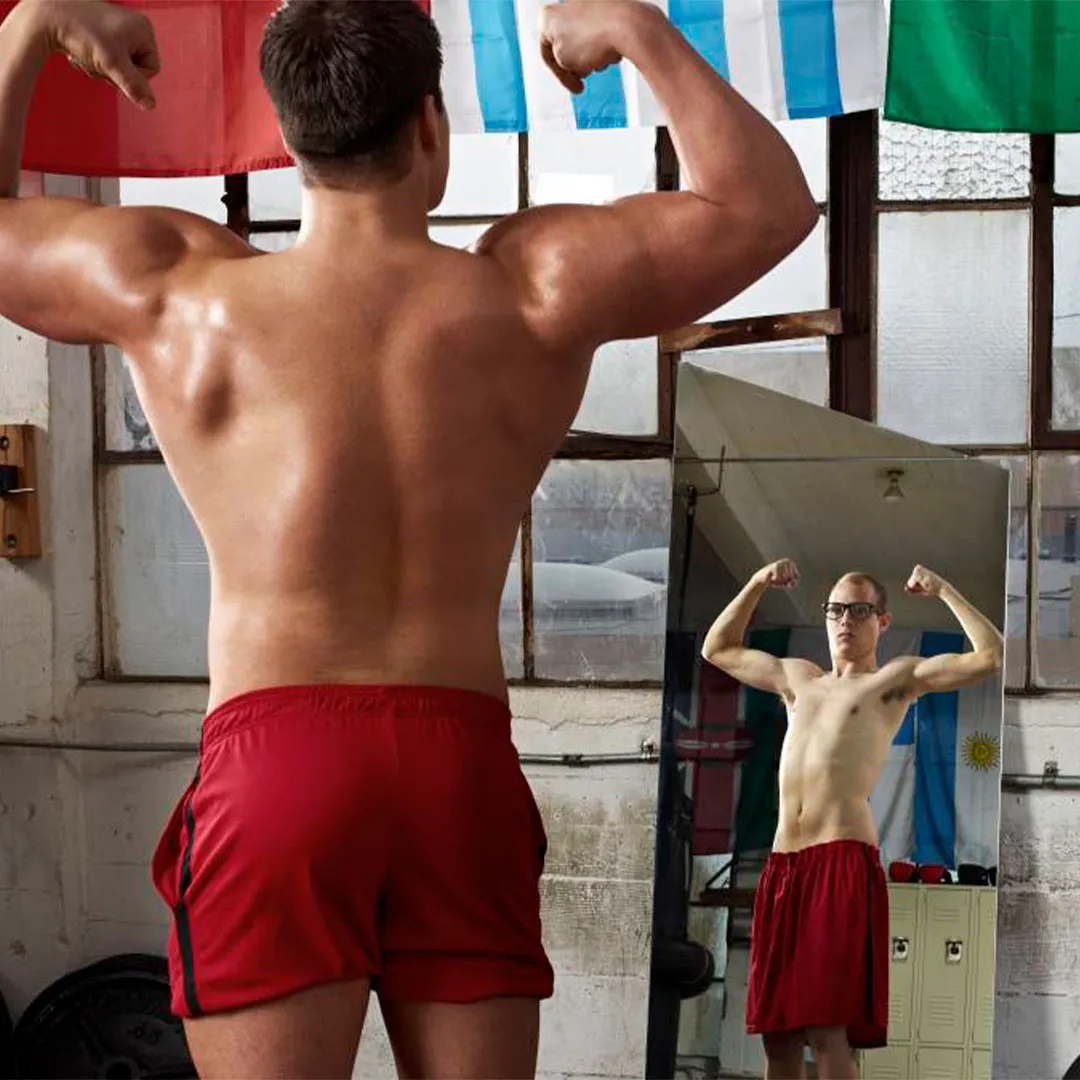
We speak of a DISTORTED IMAGE when the picture of our own body that we hold in our mind does not faithfully match reality.
If I ask you to picture your body right now, that is your perception, and it is shaped by several factors:
- Cognitive (how you learned to perceive yourself from childhood; how your family saw you).
- Emotional (the rejection or acceptance you receive for your appearance, from others and from yourself, and your level of self-esteem)
- Behavioral (Depending on the image I have of myself, I behave in ways that match that image. If my self-image is that of a super athlete, I'm more likely to eat more healthily. If my self-image is that of an obese person with a sweet tooth, it may be easier for me to eat a kilo of ice cream).
- Sociocultural (This refers to society's beauty standards and the social punishment for not meeting them. There have been societies and historical periods in which excess weight was considered beautiful).
The biggest problem is for women
Body image distortion brings enormous DISSATISFACTION. The studies mentioned showed that a higher percentage of men perceived themselves as thinner than they actually are, while women perceived themselves as heavier than they looked or actually were.
Keep in mind:
- MEMORY IMAGE: That is, if you picture yourself, how would you describe your body? In this exercise, we draw on our memory.
- PERCEIVED IMAGE: Here, you undress in front of the mirror and describe your body.
- ACTUAL STATE: This would be given by your measurements, your body fat percentage and how harmonious your body is.
The greater the gap between these images and your actual state, the bigger the problem can be.
Consequences
From eating disorders (anorexia, bulimia, bigorexia in men, fatorexia) to refusing to see yourself in a mirror, or even an ‘addiction’ to repeated cosmetic surgery, to the point of an exaggerated distortion of what is socioculturally perceived as beauty, one that tends toward artificiality: these are the consequences that threaten the health of hundreds of thousands of women around the world.
The causes often lie in self-esteem issues and a lack of acceptance, low tolerance for rejection, the relationship with one's parents, and even a tendency toward obsessive behavior.
Keys to overcoming the problem
- All PERSONAL TRANSFORMATION work must start from ACCEPTANCE. If you don't begin by accepting yourself, something about your transformation will feel off. THIS IS MY BODY, IT BELONGS TO ME.
- VALIDATION: I am much more than my body. I am much more than my face. But I am also my body, and I am also my face. WORK ON YOUR SELF-ESTEEM, ALWAYS. Turn to a coach or a professional if you need to!
- GRATITUDE: Thank you to my body, which lets me move, breathe, dance, walk, run, carry things, play sports, love…
- IMPROVE THE QUALITY OF YOUR RELATIONSHIPS: A network of support and comfort is always important, especially at times when you aren't being your own best friend.
- PRIORITIZE HEALTH over aesthetics, but understand that HEALTH, AESTHETICS, FITNESS AND LONGEVITY can go hand in hand. A qualified trainer will guide you on this.
- RECOGNIZE THE PROBLEM AND SEEK THERAPEUTIC HELP: If you're unable to recognize and value the results of your training routines and believe you have a distorted self-image, see a professional psychologist.
Asking for help is for the brave. Don't hesitate to take the first step today. And if you need it, write to us for guidance. The mirror won't always tell you the truth.