
Training Isn't Just About Changing Your Body: It's About Learning to Believe in Yourself Again
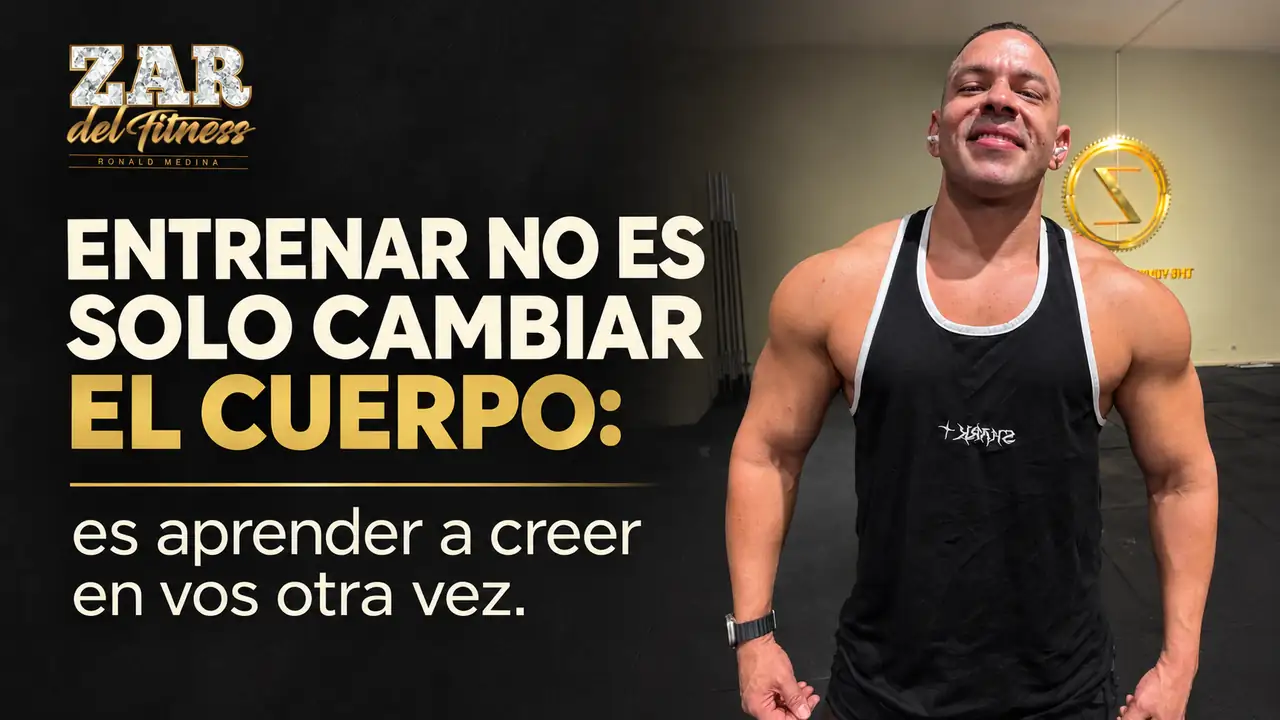
After more than 14 years as a coach and more than 4,000 people assessed, there's something I've learned that no course ever taught me: almost nobody walks into a gym just because of a few pounds.
Behind every person who comes in for the first time and tells me "I want to lose weight" or "I want visible abs", there's almost always another story. One that isn't told on the first day, and sometimes not on the second either. One that only comes out when the person feels they can trust you.
And that's where a coach's real work begins.
The goal they say and the goal they feel
Over the years I've learned to hear two goals in every client: the one they say and the one they feel.
The one they say is usually concrete: lose fat, build muscle, get in shape for summer.
The one they feel goes deeper: being able to look in the mirror without rejection, feeling capable of something, taking back control of their life, proving to themselves that they still can.
If as a coach I only pay attention to the first, I can get results. But if I learn to hear the second, I can help transform a life.
When self-esteem arrives broken
I've had clients who arrived with their self-esteem shattered. People who didn't dare to train in front of others, who apologized for being there, who avoided mirrors and talked about themselves with a harshness that hurt to hear.
Those people don't need a coach who yells louder or demands more reps. They need someone who looks at them with respect, celebrates every small step forward and reminds them, when they forget, of everything they've already achieved.
Often the first win isn't physical. It's the person coming back the following week. It's walking in one day with their head held a little higher. It's going from "I can't" to "I'm going to try".
That's progress too, even if no scale shows it.
Changing out of revenge
I've also worked with people who came in driven by rejection. Someone who left them, made fun of them, made them feel they weren't enough. And they arrived with a very clear idea: "I'm going to change so they see what they lost".
I won't judge that impulse, because it's deeply human. Pain can be a driving force too, and it's often what gets us out of bed when nothing else does.
But over time I learned something important: revenge can be the spark that starts the change, but it isn't enough to sustain it.
My job, in those cases, is to support the process so that, at some point along the way, the motivation changes direction. So the person stops training to prove something to someone else and starts training for themselves.
When that happens, the change no longer depends on anyone else. And that's when it truly becomes theirs.
Transforming through pain
Some of the most impressive transformations I've seen didn't start at a good moment. They started at the worst one.
People going through a loss, a breakup, a personal crisis or a time when they felt everything was falling apart. They found in training a place to channel what they were feeling.
Every set completed, every pound lifted and every day they chose not to give up became a way to rebuild themselves.
And the most beautiful part is that, as their body changed, so did the way they faced life. They became stronger, more disciplined, more confident. The physical change ended up forging their character.
Because when someone discovers they can overcome something they thought was impossible inside the gym, they start to suspect they can do it outside of it too.
Listening before demanding
That's why I believe one of a coach's most important tools isn't programming, technique or nutrition knowledge. All of that is essential, but it isn't enough.
The most important tool is knowing how to listen.
Listening to what the client says, and also to what they don't. Noticing when they need a push and when they need a break. Understanding that behind a missed session, a bad day or someone quitting there may be something they haven't dared to share yet.
A good coach doesn't just correct form. They support a process.
And that doesn't mean replacing a psychologist or other health professionals. It means being a steady, respectful and human presence at a time when many people need, above all, someone who believes in them.
What my clients taught me
If I had to sum up what I've learned in all these years, I'd say my job isn't about changing bodies.
It's about supporting people while they learn to believe in themselves again.
The body changes, yes. But what moves me most isn't the before and after of a photo. It's the before and after of a look in someone's eyes. It's seeing someone who arrived dimmed walk into the gym one day with a different energy, a different posture, a different way of talking about themselves.
That's the real result.
Because training isn't just about changing your body.
It's about learning to believe in yourself again.
Ronald Medina · Zardelfitness
If you want to start your own journey with someone who listens, check out our training programs.